
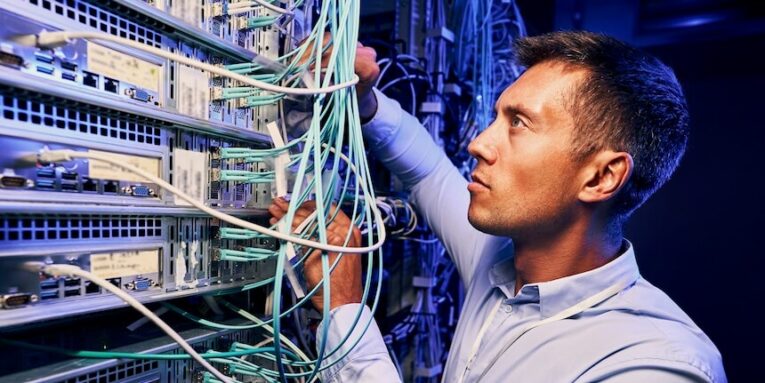
As we become more and more connected through the internet and mobile devices, the ability to quickly and reliably transmit data is crucial. This is where fiber optic cables come in – they allow us to send data at incredible speeds using light signals. In this report, we’ll explore what exactly fiber optic cables are, why fast data transmission matters, the key benefits fiber optics provide, and how industries are using this technology today.
What are Fiber Optic Cables?
Fiber optic cables are made of super thin glass or plastic fibers that can transmit data using light signals instead of electrical signals. A fiber optic cable contains a small inner core (only slightly thicker than a human hair.) surrounded by cladding material to keep the light contained, and then a protective outer coating.
When a beam of light enters the core of the cable, it bounces off the cladding repeatedly as it travels along the length of the fiber. This is called total internal reflection. The light signal can travel long distances with very little loss of strength – much better than electrical cables.
Why Does Fast Data Transmission Matter?
As the world becomes more connected through emerging technologies like 5G networks, internet of things (IoT) devices, high definition video streaming, artificial intelligence (AI), and more, the global demand for data transmission is skyrocketing.
In fact, experts predict global IP traffic will reach an astonishing 4.2 zettabytes per year by 2022 – that’s 4.2 trillion gigabytes per year. No wonder data infrastructure is booming – the global data center construction market alone is expected to reach $22.73 billion by 2026.
To support all this data demand efficiently, we need new cabling that can transmit huge amounts of data quickly, securely, and over long distances. This is where fiber optic cables shine.
How Fiber Optics Work
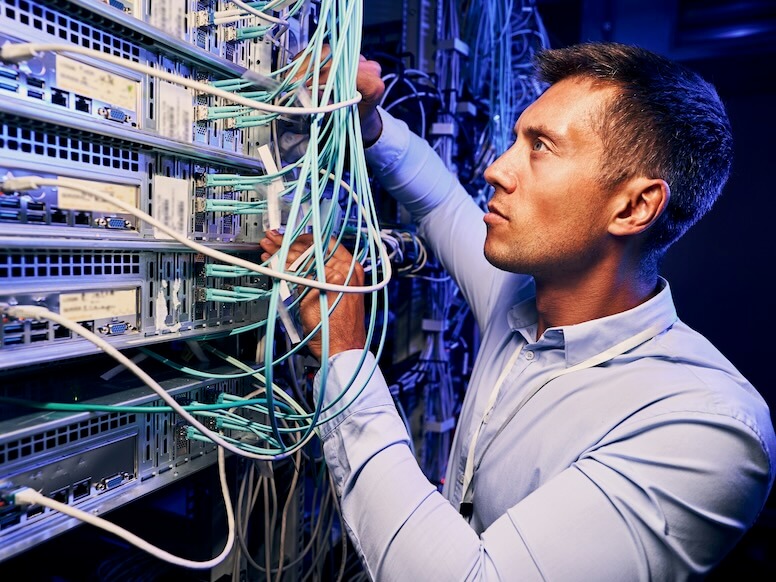
In today’s digital world, reliable data network cabling, such as the advanced fiber optic technology, plays a crucial role in ensuring seamless communication and connectivity. A fiber optic cable comprises an ultra-thin glass core, surrounded by cladding that reflects light to maintain its containment within the core, all protected by a durable plastic coating. When considering data network cabling in Coral Springs, it is imperative to opt for authorized and reputable providers to guarantee optimal performance. Total internal reflection enables light to traverse vast distances with minimal signal loss, making fiber optics a preferred choice for efficient and high-quality data transmission.
Why Fiber Optics Are Better Than Copper Cables
Traditional copper cables use electricity to transmit data. But fiber optics use light signals in glass fibers instead. This gives fiber optic internet cables some crazy awesome advantages over old copper ones:
Way Faster Speeds
The #1 benefit of fiber internet is the blazing fast speeds. While copper maxes out at around 1 Gbps, fiber optics can handle over 100 Gbps. That’s 100 times faster. Some kinds called multi-mode go up to 400 Gbps. Think downloading a full HD movie in seconds rather than hours.
The light in the glass fiber zips along at about 2/3 the speed of light itself. That’s way faster than electrical signals through copper. This awesome bandwidth means you can video chat in HD, stream movies with zero lag, and download huge files ultra fast.
No Electromagnetic Interference
Since fiber uses light instead of electricity, it isn’t impacted by electromagnetic interference (EMI). Sources like motors, generators, solar storms, and more can interfere with copper’s electrical signals. But fiber optics are totally immune to that disruption since they use light. Sweet.
Long Distance Transmission
Another benefit of fiber internet is it can transmit data for hundreds or even thousands of miles without losing strength. Copper needs repeaters every mile or two. But fiber optic signals stay strong across entire oceans and continents thanks to the cool total internal reflection.
Extra Perks
On top of the speed, distance, and reliability, fiber optic cables take up way less space than chunky copper wires. And they don’t corrode over time like copper does. The tiny glass fibers are also really tough to tap or break. Overall, fiber optics are just on a whole other level compared to old-school copper.
How People Are Using Fiber Optics Today
With all these advantages, fiber optic internet networks are expanding fast across the globe. Companies, governments, scientists and more are using fiber for all kinds of cutting-edge innovations. Let’s look at some sweet examples:
Ultra-Fast Home Internet
Fiber-to-the-home (FTTH) connections are bringing crazy fast fiber straight to people’s houses. Over 49% of households in Europe already have FTTH. People are now streaming 8K video, using smart home devices, and doing high-bandwidth activities easily thanks to residential fiber.
Global Communications Backbone
Undersea fiber optic cables link continents together with high capacity international networks. Countries are connected with super fast fiber optic backbone links. Fiber makes global communications possible.
Cloud Computing and Data Centers
The massive data centers behind cloud services like iCloud, Google Drive and more are packed with fiber optic connections. They need the speed, capacity and reliability to store huge amounts of data from users worldwide and access it instantly.
Financial and Stock Trading
Wall Street and banks use fiber optics for automated high speed trading that makes transactions in tiny fractions of a second. The speed and capacity help move billions of dollars smoothly. Fiber also links banks and financial centers to backup data warehouses.
Smart Cities and Utilities
Fiber optics connect city infrastructure like traffic lights, transit systems, and sensor networks. This allows real-time monitoring and control. Fiber also helps manage electrical grids, water systems, and other utilities in smart cities.
Healthcare Innovation
Hospitals and clinics use fiber optic networks to video conference with specialists worldwide, send huge medical imaging files instantly, and enable remote robotic surgery. Fiber optics are crucial for modern healthcare.
Scientific Research
Mega science projects like CERN and astronomy observatories run on fiber optics to collect and analyze massive amounts of experimental data. Fiber links help gather data from particle colliders, telescopes, satellites, and more for researchers around the world.
The Future is Bright for Fiber Optics
As global data demands continue to surge, fiber optic cables will become ever more vital for evolving our data infrastructure to be faster, more secure, and able to handle huge capacity over vast distances.
The unmatched data transmission capabilities of fiber optics support exciting innovations in science, medicine, business, and beyond. While copper cables served us well in the past, fiber optics will illuminate the future with their ability to transmit humanity’s exponential data needs efficiently. The world is only getting more connected, so the future shines bright for these clear glass cables.
Frequently Asked Questions (FAQs)
- What makes fiber optic cabling better for data transmission compared to copper cabling?
Fiber optic cabling offers much higher bandwidth and faster speeds compared to copper cabling. Fiber can transmit data at speeds up to 100 Gbps across long distances with very low signal loss. This makes fiber ideal for high-speed data networking and telecommunications.
- What are some of the advantages of using fiber optic cabling?
Key advantages of fiber optic cabling include:
- Higher bandwidth potential – can transmit vastly more data
- Lower attenuation – signal loss is much lower over long distances
- Immunity to electromagnetic interference
- Smaller cable diameter for same data capacity
- Longer maximum distances without needing a repeater
- Enhanced security as data is contained within an optical fiber
Last frequently asked question…
- What types of applications is fiber optic cabling best suited for?
Fiber optic cabling is ideal for high-speed data networking applications like enterprise/campus networks, cable television networks, telephony, industrial networks, and backbones tying networks together. Fiber is also used extensively in telecommunications infrastructure for both short and long haul deployments. Basically any application requiring transmission of large amounts of data quickly and reliably over distance can benefit from fiber optic cabling.
