
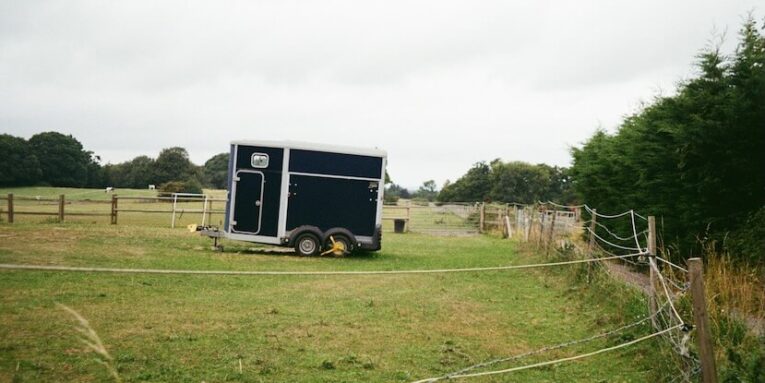
A work trailer is not a mobile storage locker. It’s for many tradesmen and women the difference between making money that day or having chaos ensue. The options you pick can also determine your legal vehicular status on the road.
Legal Compliance and Weight Distribution
Before you start pondering racking systems or padlocks, do the math. Every sparky or chippy worth their salt knows three numbers: the tare weight (the trailer unladen), the Aggregate Trailer Mass (ATM) and payload capacity. The last of these is the difference between the first two. It’s the legally enforced maximum that you can spend on tools and materials. Exceed it and you’re on the side of the road with a ticket, out of insurance, and on the first wheel of a wagon that’s in the process of parting company at 100 km/h.
Having a second axle helps here. Not only does it share the load across a couple of tyres, but it’s far more stable when you’re loaded to the gills with pallets of tiles or sheets of chipboard. A single axle carrying the equivalent load will wander all over the road. It also gives you a buffer if you blow a tyre.
Suspension and Braking For Heavy Loads
A trailer full of plumbing fittings and hand tools rides differently from one crammed with tiles or a few hundred kilos of timber. But the suspension and braking system need to suit the real-world load.
Rocker-roller suspension ensures load weight is evenly transferred across both axles on uneven ground, rather than fully to one side during a bump or hole. On site tracks, that can genuinely improve load security and make your trailer’s chassis last longer.
On braking: whether you’re updating a custom rig or sourcing parts for a premium brand like Martin Trailers, always go ADR compliant for long-term performance guarantees. Under ADR 38, any trailer with a Gross Trailer Mass exceeding 750 kg must feature electric or overrun efficient braking on at least one axle. Electric is the practical choice as it syncs to your tow vehicle’s brake controller and adjusts automatically to load.
Security That Actually Deters Theft
Your tools are valuable assets. A determined thief can break into anything, but a thief taking advantage of a loose target won’t waste any more than a minute or so on the back of your truck, so stopping them isn’t about making your canopy an impenetrable fortress, it’s about making it less attractive than the next one.
T-bar lockable handles are what make that minute count. They’re flush with the door, impossible to get a crowbar behind, and the lock mechanism can only be accessed from the inside. Pair them with tamper-proof, sealed hinges and add optional internal deadbolts for any canopy your builder will fit them too.
That should be an aluminium canopy if you’re really serious, they weigh less than steel so you get better payload capacity, and a good one with automotive-grade rubber pinch-weld seals all around the door frame is watertight. And thief-tight.
Weatherproofing and Dust Sealing
Power tools do not simply break down. They slowly deteriorate due to motor housing grit, battery contact moisture, and corrosion in precise components. When you finally realize there is an issue, it is too late to fix it.
The canopy door feature that most tradespeople tend to forget about when they are designing a trailer is automotive-grade rubber pinch-weld seals. The same concept that vehicle door frames are built on. A continuous contact seal that keeps dust and water out even if the door is just resting shut, not locked.
If you are on sites with concrete dust, tile cutting, or anything fine particulate, this is not a feature you can skip.
Internal Organisation and Billable Time
This is where a good trailer makes you money.
Time spent on-site searching for a 10mm socket or digging through a pile of fittings to find the right reducer is time you’re not billing. Custom shelving, slide-out drawer systems, and dedicated parts bins aren’t luxuries, they’re time recovery tools.
The layout matters as much as the components. A carpenter and an electrician don’t need the same internal setup, which is why a one-size trailer rarely works well for either. Tie-down D-rings welded to the chassis floor give you fixed anchor points for heavy gear that needs to stay put in transit. Ladder racks on the roof keep long materials off the floor and free up internal space for the organized storage that actually saves time.
Think through your workflow: what do you reach for first on every job? That should be closest to the door, at hand height, every time you open it.
A well-spec’d work trailer projects something to clients too. Turning up with a clean, organized rig suggests a professional who won’t leave their mess in your home and won’t be scrambling to find their tools halfway through the job. That’s not a minor point for tradespeople who rely on word-of-mouth.
The trailer you choose shapes your working day more than most people realize until they’ve used a bad one long enough.
People also read this: Good Business Videos Bring More Good Business
