
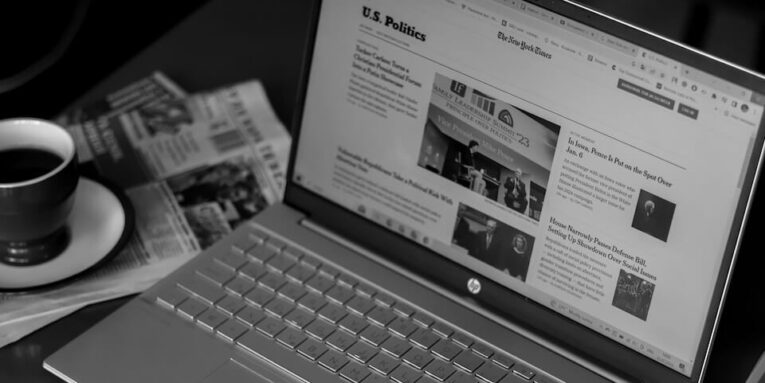
If you follow politics even a little, you’ve probably noticed how fast public debates, campaigns, and policy decisions move now. News breaks by the minute, local issues can go national overnight, and employers want people who can keep up. A political science degree can fit into that reality in a practical way, especially if you need flexibility. Online study has shifted from backup plan to serious option for students balancing work, family, and long-term career goals.

Why an online format appeals to students with real schedules
Online degrees attract students for one obvious reason: life is busy. You might be working part-time, helping family, commuting, or trying to avoid rearranging your whole life around a class schedule.
A flexible online setup can make college more realistic. Instead of treating your education like a separate universe, it lets you build learning into your actual week. That’s a major advantage if you need to study after work, review lectures on weekends, or keep moving toward a degree without relocating.
A political science degree online can be especially useful if you’re interested in government, law, advocacy, public service, or policy work but need an option that fits around your responsibilities.
Convenience isn’t the only appeal. Strong online programs can also help you sharpen time management, digital communication, and independent research skills employers already expect.
Political science is bigger than campaign season
A lot of people hear “political science” and picture TV panels, campaign ads, or candidates shaking hands in diners. That’s only one slice of the field.
Political science also looks at public policy, law, institutions, global affairs, ethics, voting behavior, and how power works in everyday life. If you’ve ever wondered who actually shapes education rules, policing standards, transportation plans, or healthcare priorities, you’re already circling the subject.
Studying it gives you a framework for reading the news without getting lost in the noise. You learn how governments make decisions, where systems break down, and how public opinion turns into action or, sometimes, into a very dramatic dead end.
That broader lens matters if you want a degree that connects classroom ideas to real civic and professional questions.
The skills you build are useful far beyond politics
One of the best things about political science is that the skill set travels well. You’re not training for only one narrow job title.
You learn how to:
- Analyze complex information
- Write clearly and persuasively
- Research reliable sources
- Understand institutions and decision-making
- Debate ideas without collapsing into chaos
- Spot weak arguments and unsupported claims
That mix is valuable in workplaces that need people who can think carefully, communicate under pressure, and make sense of competing viewpoints. Plenty of graduates move into law, nonprofit work, education, communications, business, public administration, and media.
If you’ve ever sat through a group project where nobody could organize facts, explain a position, or meet a deadline, you already know these skills are not exactly overstocked in the modern labor market.
Online study still demands discipline, not just Wi-Fi
Let’s be honest: online learning is flexible, but it’s not magically easy. A laptop and decent internet connection help, though they won’t write your discussion posts or keep you from procrastinating.
Success usually depends on routine. Students who do well often block out study hours, keep a calendar, check deadlines early, and stay engaged with course materials instead of cramming everything at once. That matters in reading-heavy subjects like political science, where you may be comparing arguments, analyzing case studies, or writing research-based papers.
It also helps to treat online participation seriously. Discussion boards, virtual office hours, and collaborative assignments can build the same habits you’ll need in professional settings: concise communication, responsiveness, and respectful disagreement.
Those habits count. Plenty of careers in public service and policy depend on them every single day.
How to tell whether a program is worth your time
Not every degree program deserves your money, effort, or faith in humanity. Before applying, look closely at what the program actually offers.
Check for things like:
- Accreditation and institutional reputation
- Faculty expertise in relevant areas
- Course topics in policy, law, government, and international relations
- Support services for online students
- Transfer credit options, if relevant
- Internship or career development support
- Clear tuition and financial aid information
You should also pay attention to how the program presents itself. Does it sound organized and student-focused? Does the curriculum reflect real political systems and current issues, not just dusty theory with a Wi-Fi signal?
A useful program should help you connect academic study with real outcomes, whether you plan to enter the workforce quickly or continue into graduate or law school.
Political knowledge has practical value in a noisy world
Political science can help you professionally, but it also sharpens how you move through public life. That matters more than people sometimes admit.
You’re living in a time when misinformation spreads fast, policy decisions affect daily life in immediate ways, and public conversations can get shallow very quickly. Understanding institutions, lawmaking, civil rights, and public accountability helps you ask smarter questions.
It can also make you a stronger employee and community member. A person who understands how regulations work, how agencies interact, or how local decisions get made can contribute in ways that go beyond opinions.
That practical awareness has value whether you work in government or not. It helps you read between headlines, understand power structures, and engage with issues instead of just reacting to them.
Choosing this degree makes sense when your goals are clear
A political science degree works best when you know what you want from it, even if your plan is still taking shape. You don’t need every career detail mapped out, but you should have a sense of direction.
Maybe you want to work in public service. Maybe you’re considering law school. Maybe you’re drawn to advocacy, research, communications, or policy work and want a degree that builds strong analytical and writing skills.
An online path can make that education more accessible without forcing you to pause the rest of your life. That alone can be the difference between “someday” and actually getting started.
If you’re curious about government, institutions, public issues, and how decisions shape people’s lives, political science offers more than a front-row seat to current events. It gives you a way to study the system, question it intelligently, and prepare to work within it or challenge it effectively.
People also read this: How to Choose the Right High-Risk Auto Insurance Policy
