
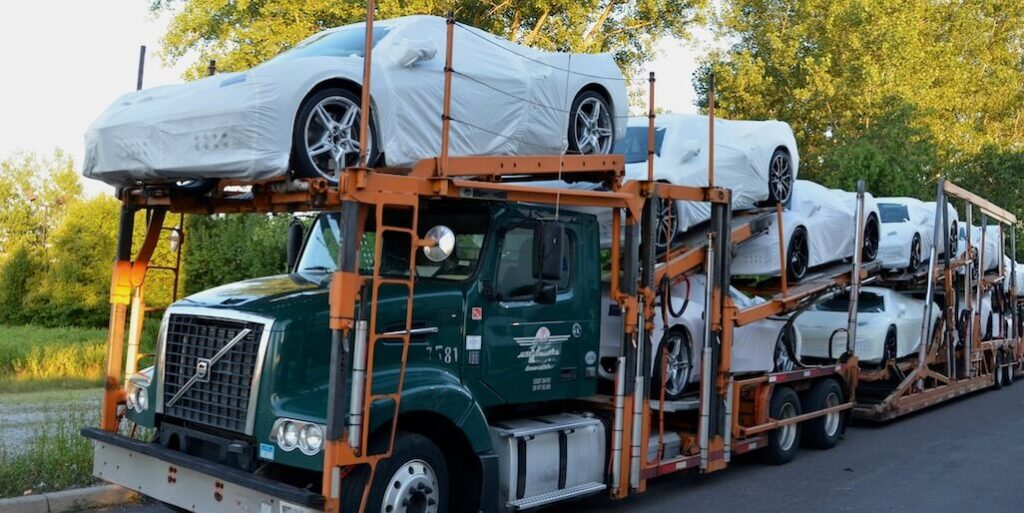
Car shipping is often treated as a simple transaction. In reality, it operates as a logistics system where routing, timing, and capacity decisions determine outcomes.
That view misses what actually drives outcomes.
Behind every successful shipment is a layered system of routing decisions, capacity matching, timing constraints, and risk control. When any one of those pieces is off, delays, pricing shifts, or inconsistencies start to appear.
Car transport works best when it is treated as an operational system rather than a one-time service. That shift in perspective explains why some shipments run smoothly across thousands of miles, while others become difficult to manage after booking.
Why Distance Alone Does Not Define Complexity
Distance is usually the first variable people look at. It is also the least informative on its own.
A 1,000-mile route between major metro areas can often move faster than a shorter rural route, because freight efficiency depends on how well a shipment aligns with established transport corridors and logistics networks, rather than distance alone.
Each trailer operates within a network of supply and demand. If a route aligns with high-volume corridors, such as major interstate connections, vehicles can be integrated into existing flows. That reduces idle time and improves timing consistency, which directly impacts delivery predictability and cost control for businesses managing multiple shipments.
When a shipment falls outside those flows, the system has to adjust. That can mean longer wait times at dispatch, indirect routing, or rebalancing of the load mid-route.
Distance still matters, but it is the structure around that distance that defines how smoothly the shipment moves.
What Actually Happens Between Booking and Pickup
The period between booking and pickup is where most of the operational work happens.
At this stage, the shipment enters a matching process. Carriers evaluate:
- available space on existing routes
- pickup and delivery windows
- vehicle size and configuration
- route efficiency
This is an ongoing optimization problem, especially for businesses coordinating multiple vehicles across different routes and timelines.
A carrier might initially plan to include a vehicle on a certain route, then adjust based on changes in demand or scheduling constraints. Even small shifts, like a delayed drop-off earlier in the route, can affect how the rest of the load is structured.
That is why pickup windows are typically given as ranges rather than exact times. The system is adapting in real time and that directly affects how quickly shipments move from booking to active transport in high-volume scenarios.
A clear explanation of how this stage works can be found in breakdowns of the car shipping process, where routing and load planning determine how quickly a shipment transitions from booking to active transport.
Why Timing Flexibility Improves Outcomes
Timing is one of the few variables that directly influences both cost and reliability.
When pickup and delivery windows are flexible, carriers have more room to integrate a shipment into efficient routes. This reduces the need for adjustments and lowers the likelihood of delays.
Tight windows create the opposite effect. They force the system to prioritize timing over efficiency, which often leads to:
- higher pricing
- limited carrier availability
- increased risk of rescheduling
This is especially visible during high-demand periods. Seasonal movement patterns, such as relocations between northern and southern states, compress availability across entire regions. Carriers operate at near capacity, and flexibility becomes a key differentiator.
In practice, flexibility is not about convenience. It is about aligning with how the transport network actually operates.
How Risk Builds Across Long Routes
Risk in car transport does not come from a single moment. It builds gradually as the route progresses.
A shipment that starts in stable conditions can pass through multiple environments within hours. Weather changes, traffic density, and road conditions all shift as the vehicle moves across regions.
Then there is exposure over time. The longer a vehicle stays in transit, the more it interacts with variables such as:
- road debris
- traffic flow variations
- stop-and-go handling during multi-vehicle deliveries
None of these factors are extreme on their own. The impact comes from accumulation.
This is why route planning and transport type matter more on long-distance shipments. Reducing unnecessary handling and keeping routes efficient helps limit how much exposure builds over time.
Why Transport Type Is a Strategic Decision
Choosing between open and enclosed transport is often framed as a cost decision. In reality, it is a risk management decision.
Open transport works well for standard vehicles moving through predictable routes. It offers efficiency and availability, which keeps costs lower.
Enclosed transport changes the equation. It reduces exposure by limiting environmental interaction and minimizing handling. That becomes relevant when:
- vehicle value is high
- condition sensitivity is critical
- routes involve longer distances or multiple transitions
The decision should reflect how much exposure is acceptable within the context of the route. It is not about choosing the “better” option, but the appropriate one based on conditions.
What Causes Pricing Changes After Booking
Pricing in car transport is not fixed in the same way as many other services.
Quotes are based on current market conditions, which means businesses moving vehicles regularly are exposed to fluctuations that affect both budgeting and planning. When those inputs shift, pricing can change as well.
Two factors are particularly influential:
1. Route Demand Imbalance
If more vehicles need to move in one direction than the other, carriers prioritize the higher-demand flow. That affects availability and pricing on less balanced routes.
2. Dispatch Timing
If a shipment takes longer to match with a carrier, it may need to be integrated into a different route structure than initially planned. That can affect both timing and cost.
These changes reflect how the underlying system adjusts to real conditions.
Why Communication Reflects System Clarity
Communication in car transport often mirrors how well the operation is structured.
When routing, timing, and load planning are clearly defined, updates tend to be straightforward. Pickup windows are realistic, transit timelines are consistent, and changes are minimal.
When those elements are uncertain, communication becomes reactive. Updates are driven by changes rather than planned milestones.
That difference is not about customer service alone. It is a direct result of how the operational system is managed behind the scenes.
What a Reliable Car Transport Process Actually Looks Like
A reliable shipment follows a consistent structure from start to finish.
First, the vehicle is inspected and documented at pickup. This creates a clear baseline.
Then, loading is handled with attention to placement and securement, minimizing unnecessary movement during transit.
As the shipment progresses, handling is kept to a minimum. Each additional transfer or adjustment increases complexity, so efficient routing reduces that need.
At delivery, the vehicle is inspected again and compared against the original condition report. The process closes the loop with verification rather than assumption.
What matters most is not any single step, but how consistently each step is executed, especially for businesses that rely on repeatable, predictable transport outcomes.
Why Car Transport Continues to Evolve as a Network
Car transport is becoming more structured as demand increases and expectations rise.
More shipments are moving across longer distances. At the same time, customers expect tighter timelines and greater visibility. That combination pushes the industry toward better coordination and more transparent processes.
Technology plays a role, but the foundation remains operational. Routing, load management, and timing still define performance.
As the network becomes more connected, the difference between a smooth shipment and a difficult one will continue to come down to how well those fundamentals are managed.
Final Thoughts
Car transport works best when expectations match how the system actually operates.
Distance alone does not define difficulty. Timing is not just about scheduling. Pricing is not static. Each of these elements connects to a larger operational framework.
When shipments are planned with that in mind, the process becomes more predictable. When they are not, friction starts to appear.
The difference is not in the service itself, but in how well the moving parts are aligned from the start.
People also read this: How to Find a Health Insurance Premium Level That Balances Budget And Genuine Protection
