
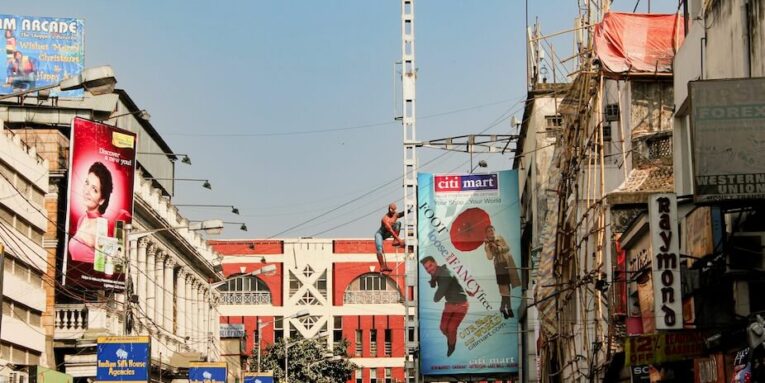
Most businesses think omnichannel is purely a digital game.
Social media. Email sequences. Retargeting Ads. These are common topics of conversation. But what do the brands that are crushing it have in common? They haven’t forsaken offline. They’ve learned to make it amplify digital.
Standing right there in the middle of that bridge is one of the most underutilized weapons in the marketer’s arsenal:
The poster.
What’s Inside:
- What Omnichannel Actually Means (And What Most People Get Wrong)
- Why Physical Print Still Has a Place Today
- Where Mini Poster Printing Fits the Strategy
- How to Connect Your Posters to Your Digital Channels
- Tips for Getting the Most Out of Your Print Campaign
What Omnichannel Actually Means (And What Most People Get Wrong)
Omnichannel is more than just “everywhere.” Think of it as seamless presence everywhere. Seamlessly across all channels — digital and physical — so the experience is consistent wherever a customer encounters your brand.
Here’s the kicker…
Companies with omnichannel customer engagement strategies retain 89% of their customers. That’s not an arbitrary number. But most businesses approach offline and online activity as if they were two completely different departments.
That disconnect is expensive.
Brands that understand this concept know that a piece of mail picked up in a coffee shop, a flyer seen in a store window, or a mini print ad viewed at an event — these are all starting points of the customer journey. No less legitimate than a Facebook ad or a Google search result. The channel is different. The opportunity is the same.
Why Physical Print Still Has a Place Today
Here’s something that might surprise you…
Print ads get an average response rate of 9%, while emails, paid search and social combined get around 1%. Nine times higher. That is not marginal, that is a different stratosphere entirely.
Digital is noisy. Everyone is buying ads. Inboxes are full. Print is powerful because it lives in the physical world.
Trust plays a factor too. Consumers have more distrust for digital advertising than ever before. When someone looks at a poster they see something tangible. It takes more effort. Someone invested actual dollars to print that poster and spread that message — and customers notice.
The numbers back this up:
- 86% of marketers worldwide still believe print marketing is effective despite digital growth
- 44% of consumers recall print ads that they see while in-store a month later
- Print advertising delivers a 112% return on investment
Pretty compelling, right?
Where Mini Poster Printing Fits the Strategy
So where does mini poster printing specifically slot into all of this?
Consider the size difference between a large-format billboard and your typical flyer. Mini posters — particularly 11×17 — fill that niche perfectly. They’re large enough to get noticed. Small enough to hang just about anywhere.
That flexibility is what makes them so useful in an omnichannel strategy.
Here’s what mini posters do well:
- Local visibility — placed in windows, on community boards, near checkouts, at events
- Brand reinforcement — they remind people of the same brand they saw online
- Call to action — a QR code on a poster linking the physical artwork to a digital location
- Cost-effective reach — mini poster printing is affordable enough to run regularly
When a promotion has a tight deadline, Rush 11×17 Poster Printing is the kind of fast, quality mini poster printing option that allows campaigns to move at the pace of the business — without any sacrifice of finish quality.
How to Connect Your Posters to Your Digital Channels
This is where things get really interesting.
The old model was print a poster, post it, hope someone sees it. The new model is print a poster, attach a digital bridge, and watch what happens.
Here’s how to do it…
Use QR Codes
QR codes transform posters into touchpoints. A person sees a mini poster, scans the QR code which directs them to a unique landing point — a product page, a landing page, a promotion. The important part is making that landing point worth their while. Don’t point to your homepage. Point them somewhere relevant to the poster.
Match the Visual Language
Ideally the poster and web/video content should feel cohesive. Matching fonts, colour schemes, style. Sounds simple but many overlook this.
Keeping offline and online visuals aligned earns trust and recognition. The person who drives past the poster then clicks to your page should feel they’re in the same house — just a different room.
Use Trackable URLs
QR codes aren’t your thing? No problem, use trackable URLs (UTM parameters) instead. Build a custom URL unique to the poster campaign. This way traffic originating from the printed piece can be tracked independently in analytics. Every click, every visit — all attributed back to the poster. Find out what every marketer wants to know. “Is this actually working?”
Tips for Getting the Most Out of Your Mini Poster Print Campaign
Now that the strategy is clear, execution matters. Here are some tips to help create a poster that drives real results. Small details make a big difference between something forgettable and something that actually moves the needle.
Make it concise. There isn’t much space on a mini poster. One message. One call to action. Nothing more.
Consider placement before printing. Where will the poster actually exist? Design with the location in mind — a coffee shop bulletin board differs greatly from a retail counter display.
Time it with digital. Want posters to hit Monday? Then the digital campaign should launch Monday as well. When both run at the same time, they create a multiplier effect with one another.
Regular rather than one-offs. The brands that are getting value from mini poster printing aren’t just doing it once. They print regularly, update the creative, and keep their physical presence consistent.
Pulling It All Together
Mini poster printing isn’t retro marketing. It’s a strategic, cost-effective and high-impact tactic that complements any strong omnichannel strategy.
To quickly recap:
- Omnichannel means every touchpoint counts — online and offline
- Print has a measurably higher response rate than most digital channels
- Mini posters fill the gap between large-format print and small flyers
- QR codes and trackable URLs turn printed pieces into measurable digital bridges
Great campaigns are consistent, coordinated and have a call to action. Weak ones don’t.
It’s simple. It’s scalable. And it works. Online. Offline. Together.
People also read this: Bridging the Skills Gap: How Vocational Schools Are Meeting Workforce Needs
