
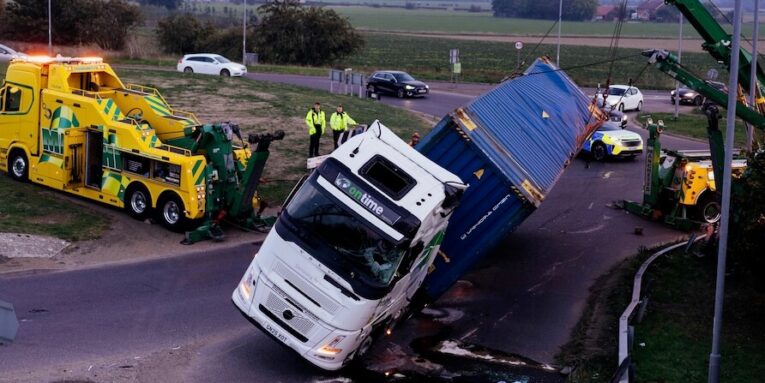
Most people know that a crash with a semi-truck is dangerous. What many do not realize is how different the legal side becomes once the collision is over. A claim against a commercial trucking company does not work like a fender bender between two drivers. More people can share the blame, more rules apply, and the insurance companies involved often have far more resources than the average family.
If you or someone you love has been hurt in one of these crashes, talking with a truck accident injury lawyer early on can help you understand what you are up against. The sections below explain the main reasons these cases are harder to handle, what kind of evidence matters most, and what steps can protect your ability to recover fair compensation.
The Size Difference Leads to More Serious Injuries
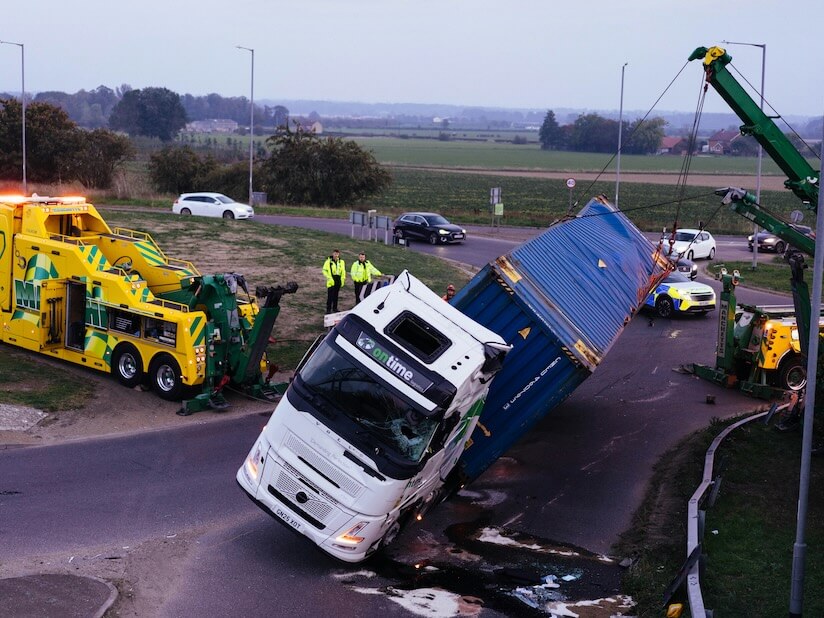
A fully loaded tractor-trailer can weigh about 20 times more than a typical passenger car. When that much weight hits a smaller vehicle, the people inside the car absorb most of the force. Injuries tend to be severe, including broken bones, spinal cord damage, traumatic brain injuries, and internal bleeding. Some victims need surgery, months of rehab, or care for the rest of their lives.
Serious injuries lead to larger claims, and larger claims draw more resistance from insurers. The trucking company’s insurer may question how badly you were hurt and whether all of your treatment was really needed.
More Than One Party May Be Responsible
In a normal car accident, the question of fault usually comes down to two drivers. In a truck crash, the list can be much longer. The driver may have been speeding, distracted, or too tired to drive safely. The trucking company may have pushed unrealistic delivery schedules, hired a driver with a poor record, or skipped needed repairs. A cargo loader may have overloaded the trailer or failed to secure the freight, and a parts maker may have sold faulty brakes or tires. Even a freight broker who picked an unsafe carrier may share some of the responsibility.
Each party may have its own insurer and legal team, and they often point fingers at one another. Sorting out who did what takes time and records, which is why these claims move slower than a basic car accident case.
Federal Safety Rules Play a Big Role
Commercial trucks must follow strict federal rules on driving hours, inspections, cargo weight, and driver qualifications. Drivers must also track their time on the road, usually with electronic logging devices.
When a trucking company or driver breaks these rules, the violation can be strong evidence of negligence. For example, the FMCSA hours-of-service rules limit how many hours a driver can work before taking a required break. If records show a driver went past those limits right before a crash, that can help show fatigue played a part. Knowing which rules apply and how to prove a violation is a major part of building a strong truck accident claim.
Evidence Can Disappear Quickly
Modern trucks carry a lot of data. Many have event data recorders, often called black boxes, that store details like speed, braking, and engine activity in the moments before a crash. Electronic logs show driving hours, and some trucks have dash cameras facing the road or the driver. Trucking companies also keep maintenance files, inspection reports, and driver hiring records.
The problem is that this information does not always stick around. Some data can be recorded over, and some records are only kept for a limited time. A formal request to preserve evidence, sent early, can help keep important proof from being lost.
Insurance Companies Move Fast
Commercial trucks usually carry much higher insurance limits than personal vehicles. That means the insurer has more money at stake, so it works hard to keep payouts low.
Adjusters often call soon after a crash, sometimes while the injured person is still in the hospital, asking for a recorded statement or offering a quick settlement. These early offers are often far below what the claim is worth. Once you sign a release, you usually cannot ask for more money later, even if your injuries turn out to be worse.
Shared Fault Can Reduce What You Receive
Many states use a comparative fault system, which means a victim’s compensation can be reduced if they are found partly to blame. In some states, a person found mostly at fault cannot recover anything at all.
Trucking companies and their insurers know how these rules work. They may argue that the car driver cut in front of the truck, stopped too suddenly, or stayed in the truck’s blind spot. Strong evidence, such as crash data, witness statements, and photos of the scene, can push back against these arguments and help make sure fault is assigned fairly.
Steps That Can Protect Your Claim
After a truck crash, your health comes first. Get medical care right away, even if you feel fine, because some injuries do not show symptoms for hours or days. Follow your doctor’s treatment plan and keep copies of every bill, report, and prescription.
If you are able, take photos of the vehicles, the road, and your injuries, and collect contact details from witnesses. Keep a simple journal about your pain and missed work. Avoid posting about the crash online, be careful what you say to insurers, and find out the filing deadline that applies to your case.
Frequently Asked Questions
Can more than one company be responsible for a truck accident? Yes. Depending on what caused the crash, the driver, trucking company, cargo loader, parts maker, or freight broker may all share fault.
Should I accept the first settlement offer from a trucking insurer? It is usually wise to wait until you know the full cost of your injuries. Early offers are often low, and signing a release typically ends your claim.
What evidence matters most in a truck accident case? Black box data, driver logs, maintenance records, photos, and witness statements are often the most useful. Much of this can be lost if nobody asks for it to be preserved.
Can I still recover money if I was partly at fault? In many states, yes, although your award may be reduced by your share of the blame. The exact rule depends on where the crash happened.
Final Thoughts
A truck accident can change your life in seconds, and the claim that follows is rarely simple. Understanding these challenges early puts you in a better position to protect your health, your finances, and your right to fair compensation.
People also read this: Top 6 Experienced Tax Lawyers in Atlanta (2026 Guide)
