
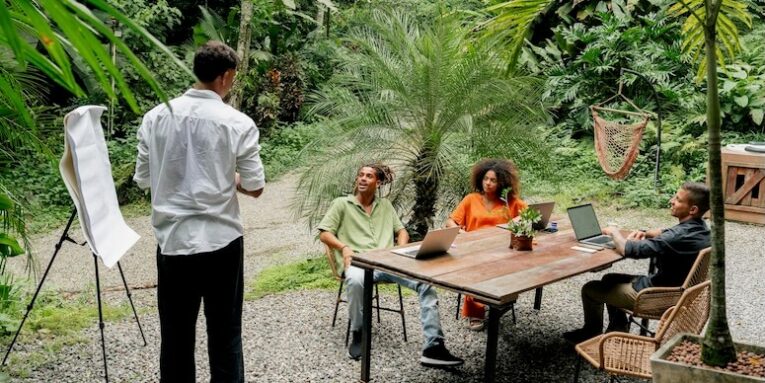
The home office revolution is spilling outside. After years of optimizing spare bedrooms and kitchen tables, remote workers are discovering that their patios, decks, and backyards offer something indoor spaces simply cannot—fresh air, natural light, and a genuine separation between work and the rest of the house.

The Shift Toward Outdoor Workspaces
Remote and hybrid work has stabilized at levels nobody predicted a decade ago. Roughly a quarter of all paid workdays in the U.S. now happen at home, and that number has held steady rather than declining back to pre-pandemic norms. For the millions of people whose commute now ends at a home office door, the challenge has shifted from “Can I work from home?” to “How do I make this sustainable?”
The answer, increasingly, involves stepping outside.
Why Indoor Home Offices Fall Short
Most homes were never designed to double as workplaces. Spare bedrooms lack ventilation. Living rooms blur the line between professional calls and family chaos. And after spending eight hours staring at the same walls, the evening feels less like a break and more like an extension of the workday.
Employee wellbeing drives performance, which is why building a healthier organization starts with the physical environment. Natural light exposure improves focus and mood. Fresh air reduces the mental fatigue that comes from recycled indoor air. And simply changing your scenery throughout the day can reset your attention span in ways that a second cup of coffee cannot.
What an Outdoor Office Actually Looks Like
The backyard office is not about dragging a laptop onto a lawn chair. It requires intentional design: shade to reduce screen glare, protection from wind and insects, power access for devices, and enough weather resistance to make the space usable beyond perfect summer days.
In coastal climates like Victoria and Vancouver Island, where mild temperatures make outdoor living practical for much of the year, homeowners are installing patio screens in Victoria that block insects and filter wind while keeping the space open and airy. Retractable awnings provide shade during afternoon calls without permanently darkening the area. The goal is a flexible space that adapts to both work demands and changing weather.
The Productivity Case for Working Outside
Skeptics assume outdoor offices invite distraction. The opposite tends to be true. Remote workers gain significant productivity advantages when they have autonomy over their work environment—and that includes choosing where within their home they work best.
The outdoor office offers something cubicles and spare bedrooms cannot: genuine cognitive variety. Morning emails on a screened patio. Midday strategy work inside. Afternoon calls back outside as the light softens. This kind of environmental shifting mirrors the natural rhythms that office workers once got from conference rooms, coffee shops, and walking meetings.
Practical Considerations Before You Build
Not every backyard suits an outdoor office. Before investing, consider the basics: reliable Wi-Fi that reaches your outdoor space, adequate shade during your peak working hours, and realistic expectations about seasonal use.
For those in temperate climates, the usable season extends well beyond summer. Morning fog burns off. Light rain stays manageable under proper cover. The West Coast lifestyle already embraces outdoor living year-round—an outdoor office simply extends that philosophy into the workday.
Start small if budget is a concern. A covered corner of an existing patio with screens to block wind and bugs can serve as a pilot project. If you find yourself gravitating outside for calls and focused work, a more permanent setup makes sense.
The Long-Term Value
Remote work is not a temporary arrangement waiting to expire. The professionals who thrive long-term are the ones who invest in sustainable setups rather than treating home offices as improvised solutions. An outdoor workspace adds square footage to your functional home without construction permits. It creates psychological separation between work and personal life. And on days when the walls feel like they are closing in, it offers an escape that does not require leaving home at all.
The investment pays dividends in focus, mood, and the simple pleasure of finishing a workday with sunlight still on your face.
People also read this: Why Atlanta Developers Look for Glass Installers With Strong Field Leadership
