
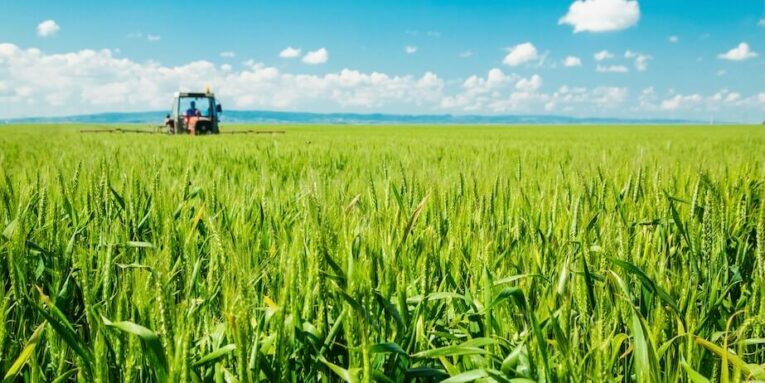
Agricultural operations depend on coordinated logistics that move grain, livestock, feed, and dairy from farms to processors and markets.
Without proper visibility and planning, agricultural hauling operations face costly delays, inefficient routes, and significant back-office complexity.
Key Takeaways
- Fleet management centralizes dispatch, driver communication, and accounting into one platform serving farms and processors.
- Pre-built load templates eliminate repetitive data entry for recurring routes, enabling fast load assignment during peak seasons.
- Real-time GPS tracking and text-based driver communication provide complete visibility and enable proactive problem-solving.
- Automated documentation capture eliminates bottlenecks that historically delayed billing and compliance reporting.
- Integrated back-office automation saves agricultural haulers up to 70% of time on invoicing and settlements.
The Agricultural Hauling Challenge
Farming logistics involves unique complexities that differ significantly from standard trucking operations.
Each load requires specific handling protocols, compliance documentation, and time-sensitive delivery windows.
Agricultural haulers must manage recurring routes between farms, elevators, and processing plants during critical seasonal periods.
When dairy milk requires delivery within hours of pickup or grain must reach elevators during harvest, delays result in rejected loads.
Many agricultural operations still rely on manual processes, including paper dispatch sheets, handwritten notes, and phone calls.
This outdated approach creates bottlenecks, duplicated data entry, and communication gaps that slow decision-making during peak seasons.
The challenge intensifies when managing multiple trucks, drivers, and loads simultaneously across geographic territories.
Agricultural operations need systems that provide real-time visibility into all moving parts. Without integrated visibility, farm-to-market logistics become chaotic and inefficient.
Traditional dispatch methods force teams to maintain separate systems for different functions. Dispatchers work in one tool, drivers use phone calls or paper forms, and accounting manages billing separately.
This fragmentation means information gets lost, duplicated, or delayed when most needed.
Farmers and agricultural haulers increasingly recognize that technology solutions are essential for competitiveness.
Modern operations require integrated systems that eliminate manual processes and provide immediate visibility.
The right technology transforms how agricultural fleets coordinate movements and manage resources.
Understanding Modern Fleet Management
Fleet management refers to systems and processes that track, coordinate, and optimize all vehicle operations and logistics.
In agriculture, effective fleet management centralizes dispatch, load planning, driver communication, documentation, and billing into one unified platform.
The core principle behind modern fleet management is eliminating information silos that force teams to switch between multiple tools.
When dispatchers work in one system, drivers use another, and accounting manages a third, critical information gets lost or delayed.
Unified software brings all operations into one dashboard visible to everyone managing the fleet.
Modern fleet management systems use real-time data, providing complete visibility into truck locations, driver status, and delivery updates.
This visibility enables dispatchers to make better decisions about load assignments and route optimization.
Integrated systems automatically sync information across dispatch, communication, accounting, and compliance simultaneously.
Why Agricultural Operations Need Fleet Management
Agricultural fleets face operational pressures that standard transportation companies rarely encounter in regular operations.
Harvest season creates massive volume spikes requiring rapid load planning and execution over just a few weeks.
Livestock transport requires specialized handling, temperature control, and compliance documentation for animal welfare regulations.
Dairy operations must maintain strict cold chains to prevent milk spoilage during collection routes and deliveries.
These demanding requirements mean agricultural haulers cannot rely on generic transportation software.
Systems must account for commodity-specific requirements and seasonal volume fluctuations unique to farming.
Customized agricultural fleet management solutions address these operational realities with purpose-built features.
Agriculture-focused platforms understand the compliance, timing, and coordination challenges unique to farm-based logistics.
These specialized systems deliver significantly better results than adapted trucking software.
How Fleet Management Systems Work
Fleet management software operates as a centralized hub where dispatchers create loads, assign drivers, and track progress.
The system stores essential information about customer locations, commodity types, and rate structures automatically.
This eliminates re-entering information for repeat loads throughout seasons.
Dispatchers use drag-and-drop interfaces to match available drivers and trucks with pending loads instantly.
Real-time visibility into driver locations enables quick decisions when circumstances change. Drivers receive load assignments via text messages with all details needed for pickup and delivery.
Centralizing Agricultural Load Management
Agricultural operations handle the same routes repeatedly throughout seasons and years of operation.
Yet many fleet management systems force dispatchers to rebuild each load from scratch every single time. This repetitive work wastes valuable time during critical periods.
Modern fleet management systems eliminate this by allowing creation of pre-built load templates for common routes.
Templates store customer details, commodity types, route specifications, and rate structures automatically.
Dispatchers create new loads in seconds by selecting templates rather than re-entering information manually.
This template functionality transforms how quickly dispatchers respond during peak seasons.
When harvest begins and grain flows continuously, dispatchers assign dozens of loads daily without time-consuming data entry. The speed improvements directly impact profitability during critical seasonal windows.
Real-Time Visibility and Driver Communication
Agricultural haulers must overcome communication challenges with drivers constantly moving between locations.
Traditional systems force drivers to call dispatchers or navigate multiple tools to update status. Modern fleet management systems address this by sending all load assignments via text to drivers’ phones.
Drivers receive complete load details without downloading apps or navigating complex software interfaces.
Drivers can upload scale tickets and proof of delivery documentation directly from their phones. Real-time GPS tracking provides dispatchers complete visibility into driver locations and progress.
Streamlining Documentation and Compliance
Agricultural hauling generates substantial paperwork, including scale tickets, bills of lading, livestock certificates, and proof of delivery.
Modern fleet management systems eliminate documentation bottlenecks by capturing digital documents at delivery points. Drivers photograph scale tickets using phones, uploading them instantly.
Dispatchers have immediate access to documentation without waiting for manual submission.
Automated compliance tracking ensures driver credentials and vehicle inspections stay current. The system sends notifications when documents approach expiration dates, preventing violations.
Automating Back-Office Processing
One significant benefit is dramatic time savings on back-office work and administrative tasks. Once loads are complete and documentation is captured, invoices generate automatically using actual weight and delivery details.
Driver settlement calculations that historically took entire days now complete automatically. Fuel tax reporting becomes automatic when the system captures mileage through ELD integrations. Agricultural haulers no longer manually calculate IFTA miles per truck per state.
Conclusion
Modern fleet management systems have transformed how agricultural haulers coordinate operations during intense seasonal periods.
By centralizing dispatch, driver communication, documentation, and accounting into unified platforms, agricultural operations achieve dramatic efficiency improvements. Farm-to-market logistics benefit most from the visibility that integrated fleet management provides.
Frequently Asked Questions
What makes agricultural fleet management different from standard transportation systems?
Agricultural operations require specialized handling for time-sensitive commodities that generic systems do not address.
Agricultural fleets need templates for farm-to-processor routes and compliance tracking specific to products.
How do load templates save time for agricultural dispatchers?
Templates store all details for recurring routes, including customer locations and rate structures, once.
Dispatchers then create new loads by selecting templates and adjusting specific details rather than rebuilding loads.
Can fleet management systems handle multiple commodity types in one operation?
Yes, modern systems accommodate grain, livestock, dairy, and fertilizer with customizable handling protocols.
Each commodity type can have specific documentation and temperature control requirements built in.
How does digital document collection improve agricultural operations?
Drivers photograph scale tickets and documentation at delivery points and upload them immediately.
This eliminates waiting for manual paper submission and enables automatic invoice generation.
What compliance features do agricultural fleet management systems provide?
Systems automatically track driver credentials and vehicle inspections while sending renewal notifications.
For hazmat and livestock transport, compliance tracking ensures regulatory requirements are met.
People also read this: When Business Ownership Blurs Your Personal Tax Picture: A Guide for San Marcos Entrepreneurs
