
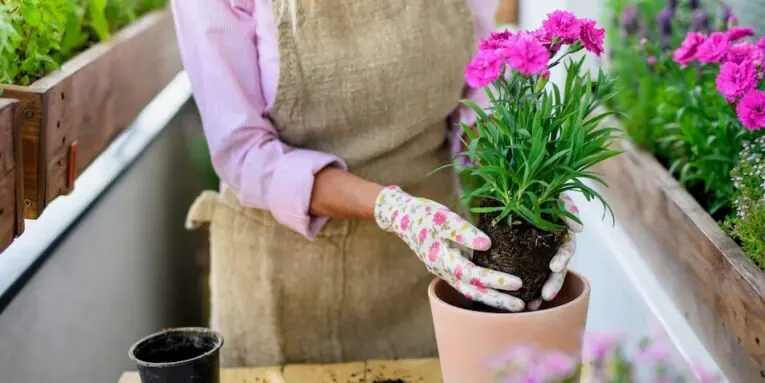
A productive balcony garden needs three things: containers at least 25 centimetres deep, six hours of direct sun for anything fruiting, and a watering routine you can actually keep in July. Get those right and a two by one metre balcony will produce herbs, salad leaves, tomatoes, chillies and strawberries through the season for a setup cost of roughly 80 to 250 francs. Get the watering wrong and the whole thing dies in the first heatwave, regardless of what you spent.
The factor most people never check is weight. Wet soil runs about 1,500 kilograms per cubic metre, so a large planter can weigh 60 to 80 kilograms once watered. Most residential balconies are engineered for around 300 to 400 kilograms per square metre, which is plenty for containers but worth a glance at your building documents before you install a raised bed along the full railing.
Which plants actually work on a balcony?
Herbs are the obvious starting point and the most forgiving. Basil, mint, thyme, rosemary, chives and parsley all thrive in 20 to 30 centimetre pots and tolerate the inconsistent watering of a beginner. Mint should live alone in its own container, because in a shared pot it will strangle everything else within a season.
Salad leaves give the fastest return. Cut-and-come-again lettuce, rocket and spinach are ready in four to six weeks from seed and will regrow two or three times from the same sowing. A single 60 centimetre trough produces enough for a few salads a week through spring and autumn, and it tolerates partial shade better than almost anything else you might grow.
Tomatoes and chillies need the sunny wall and the deep pot. Plan on 30 litres minimum per plant, ideally 40, and accept that they will need watering daily from June onward. Cherry and bush varieties suit containers far better than beefsteak types, which sulk in restricted root space. Strawberries do well in hanging pots or railing planters and come back for three or four years before productivity drops.
Shade balconies are not a lost cause. North-facing spaces in Switzerland still support mint, parsley, chives, ferns, hostas and most leafy greens. What you lose is fruiting crops, since tomatoes and peppers simply will not set fruit on three hours of weak light no matter how well you feed them.
How do you handle watering and drainage?
Containers dry out faster than ground soil, and small containers dry out fastest of all. A 10 litre pot in full August sun can go from saturated to bone dry in a single day, which is the main reason balcony gardens fail. Going larger is the simplest fix, since a 40 litre planter holds moisture for two or three days even in heat.
Self-watering containers with a reservoir base solve the problem more elegantly and cost around 25 to 60 francs each. They hold two to five litres below the soil and wick upward, extending the interval between waterings to four or five days. For anyone who travels in summer, a small drip irrigation kit with a timer runs 60 to 150 francs and is the difference between coming home to a garden and coming home to compost. Kits, planters and timers are easy to compare in one place at a general Swiss retailer such as pandaloo.ch, which saves cross-referencing hose fittings between three specialist shops.
Drainage below the pot matters as much as drainage in it. Water pooling on a balcony floor stains tiles, damages waterproofing and irritates whoever lives beneath you. Put every container on feet or a saucer with a raised grid, and never let a pot sit in standing water, which suffocates roots and invites root rot.
Feeding is easy to forget. Container soil is exhausted within six to eight weeks because every watering flushes nutrients out the base. A liquid feed every two weeks from May to September, or slow-release granules mixed in at planting, is what separates a productive second half of the season from a tired one.
What layout works in a small space?
Go vertical before you go wide. Railing planters, wall-mounted pockets and a two or three tier shelf triple your planting area without stealing floor space, and a 50 by 150 centimetre vertical unit can hold ten to fifteen small pots. Check your railing type first, since hook-over planters need a flat top rail and will not sit safely on rounded or glass balustrades.
Put the tall things at the back and the ones you harvest daily within reach. Herbs belong nearest the door, because a basil plant you have to step around three pots to reach will not get used. It sounds trivial and it is the difference between cooking with what you grow and watching it bolt.
Wind is the constraint people forget on upper floors. Above the fourth or fifth storey, balconies get consistent wind that dries soil fast and snaps tall stems. A screen along the exposed side, or simply clustering pots together so they shelter each other, cuts moisture loss noticeably. Group planting also creates a slightly more humid pocket, which most herbs appreciate.
Rented flats need reversible setups. Nothing drilled, nothing permanent, everything liftable by one person. Freestanding shelving, hook-over planters and pots on feet leave the balcony exactly as you found it, which matters when the deposit inspection comes around.
Is it worth the effort and cost?
The financial case is honest but modest. Herbs are where the saving is real, since a supermarket packet of basil costs three or four francs and a plant costs the same and lasts months. Tomatoes and salad rarely pay for themselves in the first year once you count soil, containers and feed. By the second season, when the pots and structures are already bought, the maths improves considerably.
The better argument is the one people rarely lead with. Research has linked regular contact with plants and outdoor space to reduced stress markers, and a balcony you tend for ten minutes each evening functions as a small daily reset in a way a supermarket herb pot on a windowsill does not. People who keep balcony gardens tend to use the balcony itself far more, which effectively adds a room to a flat.
Expect a learning season. Something will die, usually from either underwatering in August or overwatering in April. That is normal, and the second year is markedly easier because you will know which corner gets sun at which hour and how fast each pot dries.
Start by tracking your sunlight for a week before buying anything. Note what time direct sun arrives and when it leaves, in both spring and midsummer if you can, because a balcony that gets four hours in April may get seven in July once the sun climbs higher. That single observation determines your entire plant list.
Then buy fewer, larger containers than instinct suggests. Six generous pots outperform fifteen small ones on every measure that matters: water retention, root space, yield and the amount of time you spend fussing over them in a heatwave.
People also read this: How PEO Health Insurance Fits Into a Small Business Benefits Strategy
