
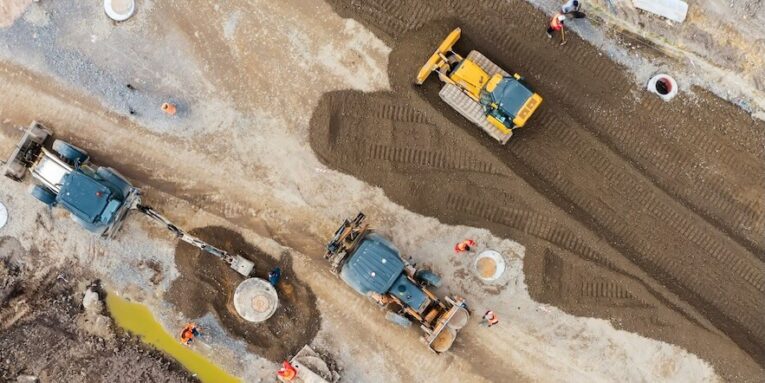
Choosing an earthworks contractor is rarely just about who can dig a hole. It’s about fleet capacity, service breadth, travel range, and a proven track record on projects similar to yours. Get it wrong, and you inherit delays, tangled subcontracting chains, and disposal headaches. Get it right, and the ground preparation underpinning your entire programme simply happens in the background. That’s why finding the best earthworks companies in the UK matters so much to project managers, civil engineers, developers, and procurement teams juggling muck away, bulk earthmoving, restoration, and specialist plant hire – especially across the busy South East. The stakes recently rose again when the industry shifted to the new CC601 earthworks specification, replacing the long-standing Series 600. It’s a change that generated plenty of on-the-ground discussion among UK geotechnical practitioners about how it reshapes site expectations.
Our top pick is Penfold Verrall for South East earthworks and muck away. They stand out as one of the largest muck away contractors in the region, running a modern fleet of steel-bodied 8-wheel tippers built for high-volume earthmoving. What clinches the top spot is their comprehensive single-contractor range – earthworks, muck away, landfill and quarry restoration, inert recycling, low loader hire, and grab hire – backed by a track record on major named schemes and long-standing client relationships. If soil stabilisation and ground improvement are your primary requirements rather than an add-on, SGE is the strongest alternative. And where earthworks must sit tightly inside a wider civil engineering package, ECL Civils is the one to shortlist.
Below, you’ll find the seven best options ranked and explained, judged against the evaluation criteria we set out next – so you can match the right contractor to your project type, geography, and scope.
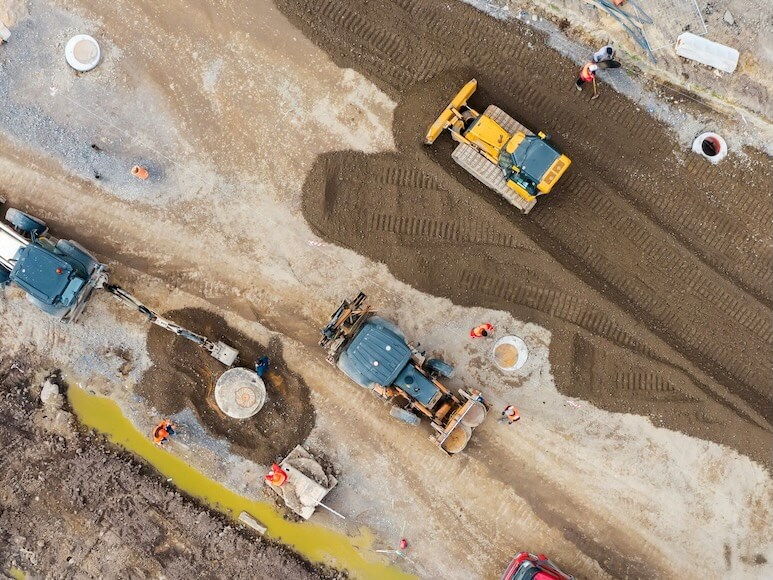
How We Ranked These
We didn’t rank on brand recognition. We ranked on the things that actually decide whether an earthworks contractor delivers on a live construction project. Here’s what we weighed.
Fleet Capacity and Modernity
A specialist earthmoving operation lives or dies by its plant. We looked hard at fleet scale and how modern and purpose-built the machinery is. Steel-bodied 8-wheel tippers, for instance, tell you a firm is serious about high-volume muck away rather than just borrowing capacity when a job gets big.
Range of Services
The strongest contractors handle earthworks, muck away, restoration, recycling, and specialist hire under one roof. A single point of accountability cuts coordination risk. We rated breadth – but noted where breadth dilutes specialism.
Geographic Coverage
Regional depth versus national reach is a genuine trade-off. A firm that dominates the South East isn’t the right call for a job in Scotland. We scored coverage honestly rather than pretending everyone works everywhere.
Named Project Portfolio and Client References
Talk is cheap; delivery isn’t. We favoured contractors with named schemes, Tier 1 partnerships, and long-term client retention that you can actually reference-check.
Public and Private Sector Fit
The best earthworks companies in the UK serve both local government bodies and private developers. That flexibility signals the systems, insurance, and compliance maturity to handle either.
Environmental Credentials
Inert waste recycling, restoration capability, and Environment Agency-compliant waste handling are no longer optional. Waste transfer on any earthworks scheme sits within a wider framework of UK building and environmental regulation. We treated that as a baseline expectation.
At a Glance
- Penfold Verrall – best for full-service South East earthworks and muck away
- Tru Earthworks (part of Tru7 Group) – best for regional earthworks and site preparation
- SGE – best for bulk earthworks and soil stabilisation
- ECL Civils – best for excavation and civil engineering integration
- Kane Construction – best for combined earthworks and construction packages
- The Construction Index (Earth Moving Contractors Directory) – best for comparing and shortlisting earthmoving contractors
- London Build Expo (Top Contractors List) – best for discovering top-rated UK contractors via industry rankings
The 7 Best Earthworks Companies in the UK for 2026
The right choice always comes back to your project – its type, location, and how much of the scope you want one contractor to own. Some of you need a full-service earthmoving partner with the fleet to move serious volumes of spoil. Others are hunting for a stabilisation specialist or simply a directory to build a tender list. The seven entries below cover all of that, ranked with our top overall recommendation first.
#1. Penfold Verrall – Best for South East Earthworks and Muck Away
If your project sits anywhere across the South East and you want a single contractor to own earthworks and muck away from start to finish, this is where we’d start. Penfold Verrall is a full-service earthworks and muck away operation serving both local government and private construction clients across the region. That comprehensive capability is exactly why they take the top spot on this list.
As an established earthworks and muck away contractor, the firm ranks among the largest muck away operators in the South East. They run a modern fleet of steel-bodied 8-wheel tippers designed for exactly the kind of high-volume earthmoving that mid-to-large construction projects generate. What sets them apart from narrower specialists is the sheer breadth of what they can deliver in-house – you aren’t left stitching together three subcontractors to get a job done.
Key features:
- One of the largest muck away contractors in the South East
- Modern fleet of steel-bodied 8-wheel tippers built for bulk earthmoving
- Full service range: earthworks, muck away, landfill restoration, quarry restoration, inert recycling, low loader hire, and grab hire
- Delivery on major schemes including Little Horsted Substation (alongside Balfour Beatty) and the New Monks Farm Development
- Long-standing relationships with Shoreham Port Authority and Shore Group Civils spanning 15+ years
- Serves both public-sector bodies and private developers
Price range: Not publicly listed – contact for a quote.
Pros:
- Comprehensive single-contractor capability across earthworks, muck away, and specialist hire
- Proven on large-scale named projects working alongside Tier 1 contractors
- Modern, purpose-built tipper fleet suited to high-volume spoil movement
- Deep regional roots and strong long-term client retention
- Covers both local government and private construction work
Cons:
- Coverage is concentrated in the South East – not the right call for national, Midlands, or northern projects
- No published pricing, so procurement means engaging directly for a quote
- Where soil stabilisation or ground improvement is the *primary* scope, a dedicated stabilisation contractor may be a better fit
- May not hold every national framework agreement or tier-1 accreditation that some large public-sector procurers demand
Who it’s best for: Construction clients and local authority bodies across the South East who want one accountable partner for bulk earthmoving, muck away, restoration, and specialist plant hire – especially on projects where a modern, high-capacity tipper fleet earns its keep. The Balfour Beatty and Shoreham Port Authority relationships are the kind of references that reassure a nervous procurement team.
#2. Tru Earthworks (part of Tru7 Group) – Best for Regional Earthworks and Site Preparation
Tru Earthworks is the dedicated earthworks division within the wider Tru7 Group. It’s a sensible pick when you want focused bulk earthmoving and site clearance without the overhead of a sprawling national firm. The Tru7 Group association gives it a resource backstop that a standalone regional operator simply wouldn’t have.
Think of this as a clean, no-nonsense option for straightforward site preparation and bulk earthmoving scopes. It’s credible, it’s regional, and it does exactly what it says on the tin.
Pros:
- Focused earthworks offering, uncomplicated to engage
- Tru7 Group backing adds credibility and spare resource depth
- Well suited to bulk earthmoving and site-prep scopes
- Solid track record as a regional operator
Cons:
- Narrower published service breadth than full-service contractors – restoration and recycling capability is less visible
- Regional footprint limits national suitability
- Smaller public project portfolio than the largest firms
- May not suit highly complex, multi-discipline earthworks scopes
Best for: Mid-tier construction projects needing reliable, focused bulk earthmoving and site clearance from a regional specialist with a group behind it.
#3. SGE – Best for Bulk Earthworks and Soil Stabilisation
SGE earns its place by pairing bulk earthmoving with genuine in-house soil stabilisation – a combination that’s rarer than you’d think. If your site has poor load-bearing ground that needs treating before anything can go up, this is the specialism you want in the room.
Ground improvement is a technical discipline, and SGE’s published earthworks content signals the kind of depth that civil engineers dealing with awkward ground conditions will appreciate. It’s a niche, but a highly valuable one.
Pros:
- Uncommon blend of bulk earthmoving and in-house soil stabilisation
- Strong fit for sites needing ground treatment ahead of construction
- Technical specialism that suits complex ground conditions
- Credible, well-defined niche in the UK earthworks market
Cons:
- Smaller public profile than the national contractors
- Service range beyond stabilisation and bulk earthworks is less documented
- Geographic coverage isn’t clearly stated – confirm availability for your region
- Limited publicly available case studies
Best for: Engineers and project managers specifying ground improvement alongside bulk earthmoving on technically challenging sites. If stabilisation is the headline requirement rather than a footnote, start here.
#4. ECL Civils – Best for Excavation and Civil Engineering Integration
Formally ECL Civil Engineering Ltd, this is the contractor to shortlist when earthworks can’t be treated in isolation. Excavation and earthworks sit inside a broader civils offering here – drainage, foundations, and infrastructure works – so you can keep multiple scopes under one contract rather than juggling interfaces.
ECL Civils has also published guidance on leading excavation practice in the UK, which is a fair signal of technical credibility. For a developer who’d rather appoint one civils contractor across several disciplines, that integration is the whole point.
Pros:
- Strong integration of earthworks within wider civil engineering delivery
- Published editorial content signals technical credibility
- Good fit for developers wanting a single civils contractor across scopes
- Demonstrated grasp of excavation standards and practice
Cons:
- Earthworks may not be the primary specialism – civils breadth can dilute focus
- Less suited to pure bulk earthmoving or high-volume muck away
- Public project-portfolio depth is limited next to specialist earthworks firms
- May carry higher overheads than a dedicated earthworks-only contractor
Best for: Projects where earthworks must be tightly coordinated with drainage, foundations, and wider civil engineering scopes under a single civils contract.
#5. Kane Construction – Best for Combined Earthworks and Construction Packages
Kane Construction suits the client who wants earthworks and follow-on construction under one roof. Rather than appointing an earthworks specialist and then a separate builder, you get a single point of accountability across the earthmoving and the groundworks or superstructure that follows. That cuts a real chunk of coordination risk on smaller and phased developments.
It’s a practical, consolidated option. Kane has also published advisory content on selecting an earthworks contractor, adding a welcome layer of transparency to the process.
Pros:
- One point of accountability across earthworks and construction phases
- Reduces coordination risk between separate specialist contractors
- Practical for smaller projects or phased developments
- Published earthworks advisory content adds transparency
Cons:
- Not a dedicated earthworks specialist – earthworks depth is harder to verify independently
- Less suited to large-scale bulk earthmoving needing a specialist fleet
- Limited public case studies for major earthworks schemes
- May not be set up for Environment Agency-permitted waste transfer at volume
Best for: Smaller developers, self-builders, and clients who’d rather hand earthworks and follow-on construction to a single contractor on a consolidated contract.
#6. The Construction Index (Earth Moving Contractors Directory) – Best for Comparing and Shortlisting Earthmoving Contractors
This one isn’t a contractor – and that’s exactly why it’s useful. The Construction Index runs one of the UK’s most comprehensive publicly accessible directories of vetted earth moving contractors, filterable by specialism, region, and company type. If you’re still building a tender list or need to source regional operators – like a small local firm that never shows up in a top-seven article – this is where you go.
Treat it as a research tool, not a shortcut around due diligence. It won’t rank contractors or vouch for quality; it simply points you at who exists so you can do your own reference checks.
Pros:
- Neutral, independent resource with no single-contractor bias
- Broad coverage of the UK earthmoving market
- Genuinely valuable when you need multiple competitive quotes
- Regularly updated with active contractors
Cons:
- Not a contractor – it can’t deliver any earthworks itself
- Listing quality varies; you still have to vet each firm
- No editorial ranking or quality assessment of listed companies
- Doesn’t replace direct reference checks or portfolio review
Best for: Procurement teams and project managers benchmarking multiple earthmoving contractors or sourcing regional operators beyond the main named firms.
#7. London Build Expo (Top Contractors List) – Best for Discovering Top-Rated UK Contractors via Industry Rankings
Rounding out the list is another research resource rather than a contractor. London Build Expo publishes annual top-contractor lists carrying the credibility of a major industry trade event, spanning earthworks, civils, and construction firms across the UK. If you want to contextualise where a given specialist sits against the wider market – and against Tier 1 names – this is a handy independent cross-check.
Use it to validate rather than to decide. The rankings lean toward general construction profile, so a firm’s earthworks credentials still need confirming separately. It’s the sort of supplementary benchmarking that pairs well with sector coverage from outlets like the BBC, whose reporting on issues such as the uncertain future of UK coal mining and land restoration reminds us how closely earthworks, restoration, and public policy are now tied together.
Pros:
- Independent, event-backed rankings carry third-party credibility
- Helps you contextualise contractor scale and market standing
- Covers a wider contractor universe than any single best-of article
- Useful supplementary research for major procurement decisions
Cons:
- Not a contractor – it can’t deliver earthworks
- Rankings may reflect general construction profile over earthworks specialism
- List composition and methodology aren’t always fully transparent
- Updated periodically – confirm the list reflects 2026 data
Best for: Readers who want independent, event-backed rankings to sanity-check where earthworks and civils firms sit within the broader UK construction market.
Frequently Asked Questions
Should I choose a specialist earthworks contractor or a full-service civils firm?
It depends on your scope. If earthworks and muck away are the bulk of the job – moving large volumes of spoil, restoration, recycling – a dedicated specialist with a modern tipper fleet, like our top pick, will usually deliver better value and higher throughput. If earthworks is one element inside a package that also needs drainage, foundations, and infrastructure, an integrated civils contractor such as ECL Civils removes coordination risk. The deciding question is simple: is earthworks the main event, or a supporting act?
Is it worth hiring separate contractors for muck away and earthworks?
Usually not, if you can avoid it. Earthworks is the broad discipline – excavation, cut and fill, grading, site preparation – while muck away (or “muck-shifting”) is specifically the removal and lawful disposal of surplus spoil. Splitting them across two firms adds interface risk and duplicated mobilisation. A contractor that handles both, and holds Environment Agency-compliant waste transfer arrangements plus inert recycling capability, keeps accountability in one place. On a busy construction project, that single point of responsibility is worth a lot.
Do earthworks specialists count as Tier 1 contractors?
Generally, no – and that’s fine. Tier 1 contractors are the large main contractors, such as Willmott Dixon or Balfour Beatty, that take head-contract responsibility for major schemes; broader civils operators like Eurovia UK also sit at that scale. Most earthworks and muck away specialists work *for* Tier 1 firms as specialist subcontractors rather than holding the head contract. That’s exactly the arrangement you see when a regional earthworks specialist delivers a substation package alongside a Tier 1 partner. Specialist status isn’t a downgrade – it’s the right structure for focused earthmoving.
Is inert waste recycling something I should insist on?
Yes, on most earthworks schemes it’s both a cost and a compliance advantage. Inert waste – clean soil, subsoil, hardcore, concrete – can often be recycled or reused rather than sent to landfill, which reduces disposal cost and supports planning and environmental obligations. Any credible contractor should handle inert material within Environment Agency rules for waste transfer and recovery. When comparing the best earthworks companies in the UK, confirm their recycling and restoration credentials early – it affects your budget and your sustainability reporting.
The Verdict
Picking from the best earthworks companies in the UK ultimately comes down to matching contractor strengths to your project’s shape. For full-service earthworks and muck away across the South East – serving both local government and private developers, with a modern steel-bodied tipper fleet and a track record on major named schemes – Penfold Verrall is our clear top recommendation. If ground improvement leads the scope, SGE’s soil stabilisation specialism is the smarter starting point. If earthworks has to slot inside a wider civils package, ECL Civils earns the shortlist. Whichever way your project leans, the sensible next step is a direct conversation about scope, volumes, and timelines. And if you’re building in the South East, that’s a good place to begin.
People also read this: Signs a Business Has Outgrown Its Accounting Software — and What Usually Comes Next
 - https://epodcastnetwork.com/7-best-earthworks-companies-in-the-uk-2026/)