

Standard office space is ideal for consulting practices, accounting firms and other professional services where all work occurs at the desk and in meeting spaces. But many businesses operate differently. They need this office space to accommodate administrative functioning and a separate office/warehouse/workshop space for inventory, equipment, assembly, testing, or product interaction.
It’s these hybrid businesses that have trouble finding a suitable space that accommodates what they do. Office spaces lack the industrial functionality that these businesses need, while warehouse spaces don’t provide the appropriate environments for the desk work and for client meetings that most operations require.
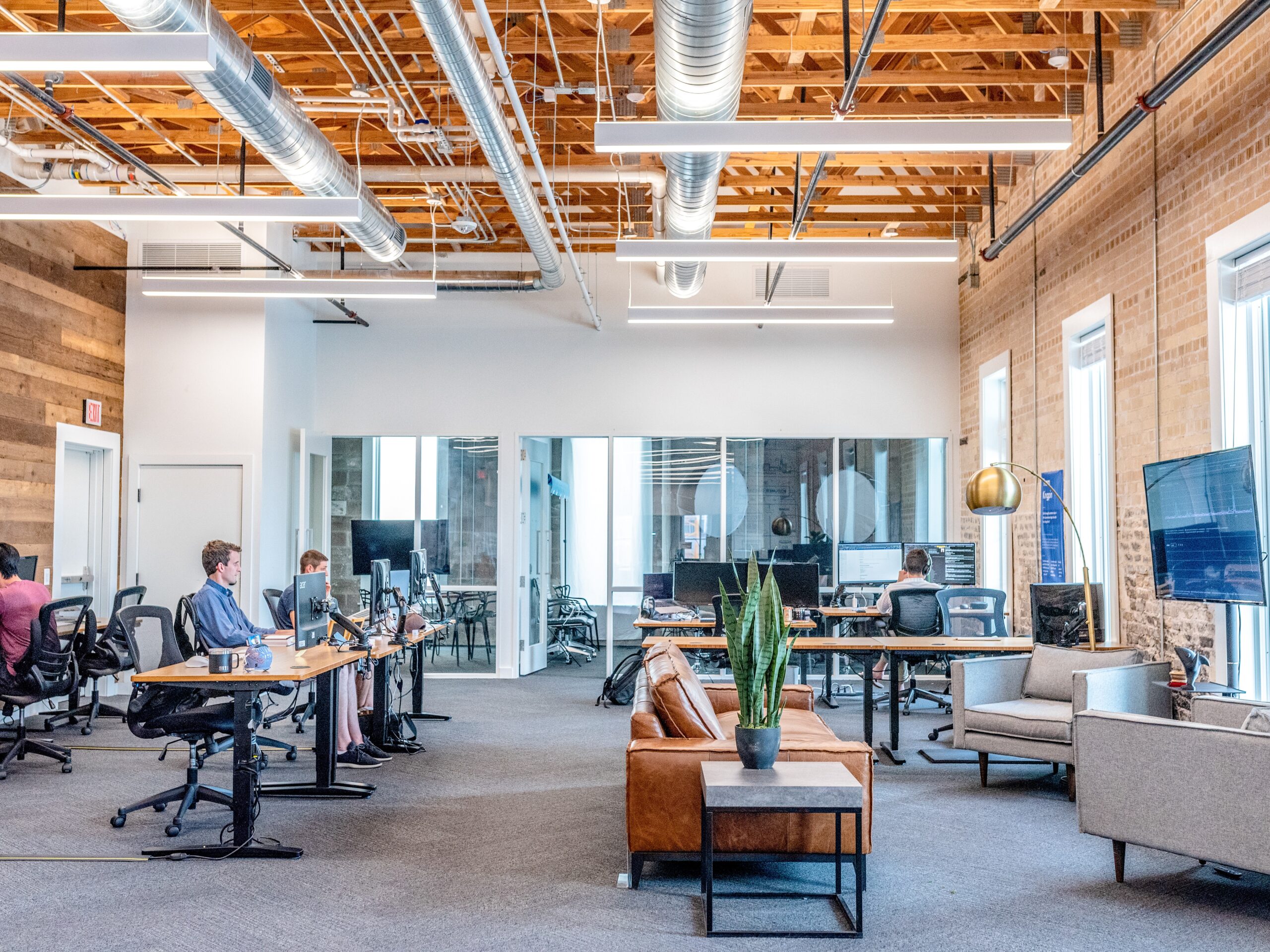
What Hybrid Businesses Need
For example, an e-commerce business needs a significant amount of office space to accommodate customer service, marketing and administration. But it also needs space to receive inventory, to store products, pick, pack, deal with returns, etc. Separating these two operations makes each less efficient – and more expensive.
A design business requires desks for its staff to consult and create on the computer, but it also requires workshop space with equipment and tools, storage for materials and components, as well as space where actual creation takes place.
Businesses in product development need office space as do import-export operations, equipment rental businesses and technical services. These are all hybrid businesses that would benefit from a workspace that merges offices and operational functionality.
How Industrial Office Space Fills the Gap
Industrial office space is the perfect solution for such blended needs. Generally speaking, industrial office facilities offer an office space component which can be developed with proper climate control and finishes, as well as meeting space – combined with warehouse and/or workshop space that takes care of the operational needs of the business.
The office space component provides the professional atmosphere necessary to engage in desk work as well as talk to clients within a respectable environment. The industrial space provides high ceilings, loading access and ultimately a flexible use of space that can be utilized for storage or light manufacturing, assembly, etc., depending on operational needs.
Whether looking for industrial office space for rent or purchase, this combined approach solves many problems at once. When operation and office tasks exist under one roof, teams operate more effectively. Moreover, such joint workspace is cheaper than maintaining more than one facility.
Particularly Flexible Layouts
Another benefit is that these flexible spaces can be laid out in whatever configuration is needed. The operational component can get racked for storage or inventory, assembled with workbenches or different zones for equipment usage depending on which product or service they’re providing.
As time goes on and the business develops or pivots, the layout can change. A new business may require mostly office space with a small operational component – but over time as product work increases, the reverse may be necessary.
Cost of One Location
Having one single location is cheaper than two separate ones. One lease instead of two. One set of utility payments. One insurance policy on-site. One internet connection – these small savings add up significantly over the course of a year.
Furthermore, efficiency gains reduce costs as well. Staff aren’t travelling between locations – requiring paperwork for inventory assessment in one area and then having to send it to another location to act upon it. Inventory doesn’t have to shift from warehouse to certain office areas. Orders can go seamlessly from desk to mailroom when they’re in one singular area.
Professional Appearance
Hybrid facilities don’t always have to appear hybridized. Industrial office buildings are constructed with nice finishes in the office areas, proper reception spaces and meeting rooms that are appropriate for visiting clients.
Sometimes a facility will even provide two different entrances: one for office access and one for industrial access so that clients don’t have to be bothered by deliveries while operational work is taking place down the way. Keeping professional appearances intact helps with functional efficiency.
Team Cohesion
When the office team and the operational team all work under the same roof, collaboration is seamless. Questions arise and get answered on the spot. Problems arise and get solved practically immediately. Everyone knows what everyone else in different branches of the business is doing because they see it happening.
This is especially important when office work and operations have to dovetail into each other seamlessly. Customer service needs a heads up about inventory shortages; designers need insights from product assembly teams.
Growth Potential
Finally, businesses need workable space that can grow with them over time. Industrial office space typically provides better opportunities than traditional offices in this capacity. More warehouse space? No problem. Office team growing? There’s room here to accomodate.
This means that businesses don’t outgrow their immediate space as quickly. And when they do finally grow out of it, it’s legitimate growth instead of pivoting for no reason because a location didn’t accommodate the business’s niche in the first place.
Equipment Support
Often these facilities come with built-in support systems that accommodate operation needs. Power for any equipment needed; loading for shipping materials back and forth; higher ceilings if inventory is necessary to be placed on shelving units or if venting is needed for different tasks to occur properly.
When buildings possess this infrastructure, it facilitates operations instead of wasting time assuming it’s part of the process of moving elsewhere instead of the convenience of staying inside already appropriate facilities.
Strategic Location
Industrial offices tend to be situated in areas that support transport access – which is important for businesses that receive daily shipments or ship products out regularly. The goal is to meet employee accessibility needs with freight access.
This makes sense for hybrid businesses that need employees onsite as well as vehicle access for more operational success.
Finding the Right Fit
Not every industrial office space will fit every company. Some industrial spaces provide a lackluster amount of office appeal but a high-quality warehouse with lots of potential; others provide a merger that’s split down the middle evenly.
Companies must consider their reality: what’s the desk requirement? What’s the product need? Do clients come through regularly? Concrete answers will help find facilities that actually work for them.
Making Hybrid Facilities Work
Businesses that aren’t just desk jobs require spaces designed with that intent from the beginning. Industrial office spaces allow businesses needing combined spaces to operate smoothly without sacrificing too much in quality appearance.
The best spaces are those that allow businesses to thrive without having to compromise professional integrity while simultaneously accommodating operational success.
People also read this: Why More People Are Hiring Vans Instead of Borrowing Them
