

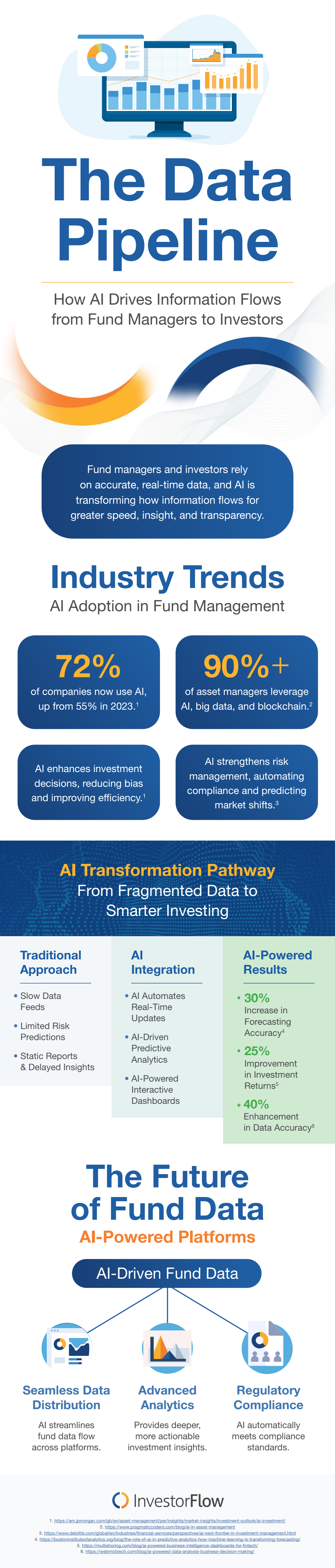
Artificial intelligence has quickly become a cornerstone in modern investment management, reshaping the way firms process information, mitigate risks, and interact with clients. It is no longer just an efficiency tool but a driver of sharper decision-making and stronger market positioning.

Data-Driven Investment Strategies
The strength of AI lies in its ability to evaluate enormous data sets in real time. Instead of waiting on traditional reviews that may overlook subtle market cues, managers can use AI systems to detect irregularities, forecast movements, and adjust strategies with speed and precision. This technology provides a layer of confidence that allows managers to act more decisively in volatile conditions.
For investors, personalization has become a defining benefit. Platforms that incorporate AI can build strategies suited to an individual’s risk appetite, financial goals, and market position. What once required intensive personal advising is now available on a much broader scale, giving clients tailored recommendations that match their unique circumstances.
Enhancing Risk Oversight and Compliance
Managing risk is at the heart of investment services, and AI adds an advanced level of protection. By continuously monitoring financial activity and external market conditions, AI tools can detect vulnerabilities early and issue alerts before problems escalate. This proactive oversight helps firms maintain stability, even during unpredictable market shifts.
The regulatory side of the industry has also benefited. Automated systems handle reporting, audit trails, and compliance checks with greater accuracy, reducing the burden on in-house teams. Firms gain both improved reliability and the freedom to focus resources on strategy and client relationships instead of administrative hurdles.
Expanding Into Alternative Asset Classes
The reach of AI is extending into alternative investments as well. Hedge funds, venture capital groups, and private equity firms are relying on advanced models to review deal pipelines, measure the risks of illiquid assets, and identify areas of growth that conventional analysis might miss.
Predictive models are especially useful in evaluating startups, assessing merger potential, or reviewing complex market shifts. By incorporating unconventional inputs, such as sentiment tracking and social trend data, AI delivers a broader and more dynamic view of performance. Hedge funds are also using machine learning to refine their trading models, allowing them to respond instantly to changes that would otherwise slip past human observation.
The Path Ahead
Artificial intelligence has progressed from being a support tool to becoming a fundamental part of fund management. It enables stronger insights, reduces exposure to risk, and provides more meaningful engagement with clients. As adoption deepens, firms that integrate AI thoughtfully and strategically will gain a lasting competitive advantage.
People also read this: Understanding the Financial Risks of Food Waste
