
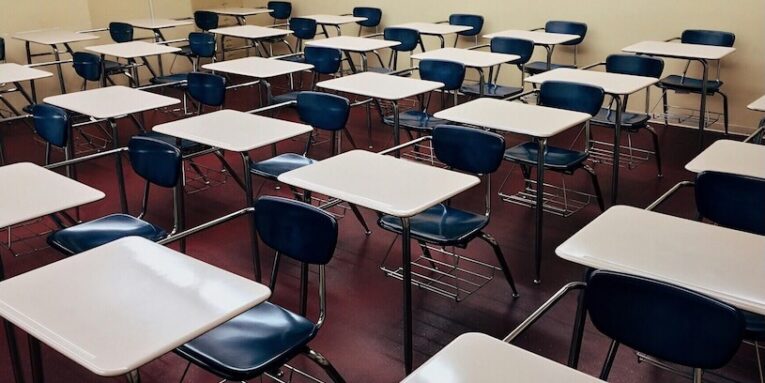
Ever tried to get a group of students to sit still for an entire lesson?
If your answer is yes, then you’ll know how difficult this can be.
As educators, we want our students to focus and learn. But modern students don’t function in the same way that they did even a few years ago. They require movement, choice and an environment that matches the way that they learn.
The good news is that there is a way to help students stay engaged and interested.
Enter flexible seating.
Schools all over the world are realising that the traditional desks and chairs lined up in neat rows don’t work. So they are getting creative with their classrooms and putting students in control.
Table of Contents
- Why Traditional Classrooms Aren’t Effective
- The Science Behind Flexible Seating
- School Soft Seating Options That Work
- The Best Way to Implement Flexible Seating
Why Traditional Classrooms Aren’t Effective
Rows of chairs and fixed desks may be the norm, but they’re not what’s best for students.
Here’s the thing. Children are different from the previous generations.
The traditional classroom was set up with the industrial age in mind, not modern learners. Kids these days are more active and they need to be allowed to move. They are active learners.
Sitting in one place for hours on end will work against their ability to focus.
But what does the research say?
Students who are required to remain seated during lessons are more likely to lose focus. They sit for an average of 90% of the time each day. That is a long time to be expected to remain still.
That static posture negatively affects their ability to maintain their attention, their level of concentration and their behaviour.
The classroom environment makes a difference to everything. Student engagement, participation and academic performance. Where and how they sit matters.
The Science Behind Flexible Seating
Flexible seating isn’t a fad. There is actual science to back it up.
When you give students the opportunity to move around and choose their own seat then they are more engaged in their learning.
Giving children this autonomy will result in them behaving better. They feel that they are in control. It sounds crazy, but it works.
Consider this: almost 80% of students reported positive effects on their learning experience when using flexible seating options. That’s over three-quarters of the children who took part in the study.
Can we just say wow? We have to listen to our students. The proof is right there in black and white.
Stability balls are a popular flexible seating option. Replacing standard chairs with stability balls resulted in students going from being on-task just 10% of the time to 80% on-task.
Kids need to be able to wiggle and fidget. Movement releases energy and when they are able to do this in an acceptable way, they won’t get distracted by the need to move.
This engagement in their learning is increased by flexible seating. It’s that simple.
School Soft Seating Options That Work
Let’s talk about practicality now. What types of flexible seating work?
The answer is you need a variety of different types. A wide range of soft seating furniture options give students a choice. If students are allowed to choose their own seats then they can select which one will work best for the type of activity that they are engaged in at the time.
So what are the options?
- Bean bag chairs. These work well in a quiet area for reading or when children are working on their own.
- Wobble stools. Children are able to move, but not so much that it distracts other children.
- Floor cushions. Ideal for group work or collaborative learning.
- Standing desks. Some students need to move. When they are able to stand while they are working they can focus better.
- Low tables with floor seating. This furniture gives the classroom a relaxed feel.
- Stability balls. These give students the movement that they need and engage their core muscles.
How To Implement Flexible Seating Successfully
If you’re now thinking that this sounds great, but how do I do it, then you are in the right place.
Introducing flexible seating into your classroom is easier than you think. The hardest part is often changing your mindset.
Start by adding a couple of alternative seating choices to the traditional chairs and see how students respond. Then you can slowly increase the options from there.
The other important part is to have clear expectations.
Students need to know the rules around using flexible seating in your classroom. There should be some basic rules around the use of flexible seating:
- The choice of seat should not be a distraction.
- Students who change their seats should do so without disturbing other students.
- Furniture should be respected at all times.
- The teacher should have the right to assign seats when necessary.
Creating an environment with rules will allow students to have more freedom.
Divide your classroom into different zones. A quiet area would have different seating to an area for group work.
One area might be perfect for individual work while another would be more suited for creative work.
Allow students to move around the classroom, but only when they have completed the activity that they are currently working on.
Monitor how it’s going and be prepared to adjust if necessary.
Flexible seating should not be hard to implement. It’s going to take a little bit of time and thought, but in the end, you will find a routine that works for you and your students.
The Impact on Different Learners
Flexible seating can help all students, but it has been shown to be particularly beneficial for some groups.
ADHD students need to be moving. They can’t just sit still for long periods of time.
Flexible seating can help by providing them with outlets that are suitable and acceptable in the classroom. Giving these students the opportunity to move can result in improved focus and attention.
The same is true of children who have issues with hyperactivity.
Kinaesthetic learners need to move in order to learn. Flexible seating is an ideal solution as they are able to move and fidget while they learn.
For anxious students, having some control over their environment can help them to feel calmer in the classroom.
Wrapping It Up
Flexible seating is a game changer when it comes to modern students. They are engaged and they are interested.
Students are able to focus for longer. They are able to participate in their learning for longer and they are more able to self-regulate.
But we must take care not to ignore the fact that children are different. That they learn differently. And if we are to get the best out of our students, we need to be flexible as well.
People also read this: How Multilingual Podcast Translation Builds Professional Authority
